


Loops & Threads Knitting Machine
Our Loops & Threads Knitting Machine transforms handcrafting into a faster, more efficient creative experience. Designed for both beginners and experienced knitters, this machine lets you complete scarves, hats, and blankets in a fraction of the time traditional hand-knitting requires.
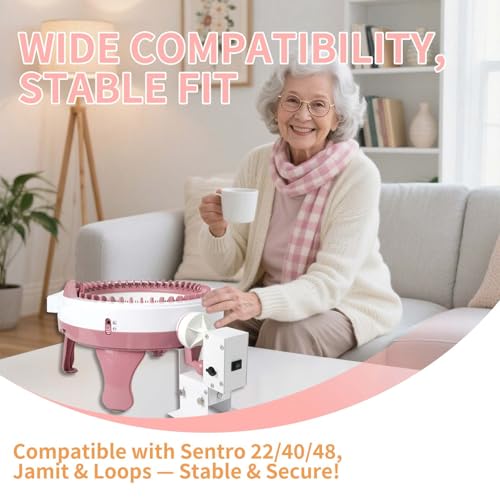
The intuitive crank mechanism and adjustable tension dial give you precise control over stitch tightness and fabric drape. We've engineered this machine with 40 needles to accommodate a wide variety of yarn weights, from lightweight sport yarns to chunky bulky fibers. The portable design fits comfortably on any tabletop, and the clamp-style base keeps your workspace stable during longer crafting sessions.
- 40-needle configuration compatible with sport, worsted, and chunky yarn weights
- Adjustable tension dial for customized stitch tightness and fabric texture
- Portable tabletop design with secure clamp-style base
- Smooth crank mechanism for consistent, comfortable operation
- Durable plastic construction with metal needle components
Machine Construction & Needle Configuration
The Loops & Threads Knitting Machine features a reinforced plastic body that balances lightweight portability with workshop durability. The 40 metal needles are precision-spaced to maintain uniform tension across every row, preventing the uneven stitches that sometimes plague manual knitting.
Our engineers positioned the crank handle at an ergonomic angle to reduce wrist strain during extended crafting sessions. The clamp base grips tables up to 2 inches thick, keeping the machine stable even when you’re working with bulkier yarns. The entire unit weighs just under 3 pounds, making it easy to pack for crafting circles or weekend retreats.
Compatible Yarn Types & Weights
This loops and threads knitting machine accepts yarn weights ranging from sport (CYCA 2) through super bulky (CYCA 6). We recommend starting with medium-weight worsted or aran yarns while you learn the machine’s operation, then experimenting with lighter or heavier fibers as your confidence grows.
Both natural and synthetic fibers feed smoothly through the needle bed. Wool, cotton, acrylic, and wool-blend yarns all produce excellent results. Novelty yarns with significant texture—such as boucle or chenille—may require slower cranking speeds and frequent visual checks to prevent snagging.
Getting Started: Setup & First Projects
The included instruction booklet walks you through threading the machine, casting on your first row, and creating basic flat panels. Most beginners complete their first small swatch within 20 minutes of unboxing.
Start with a simple infinity scarf to build familiarity with the crank rhythm and tension adjustments. Once you’re comfortable with straight panels, the booklet introduces techniques for binding off, adding fringe, and seaming multiple panels together for larger projects like blankets or shawls.
Expand Your Knitting Toolkit


What people are saying

Your Loops & Threads Knitting Machine Questions Answered
The machine accommodates sport weight (CYCA 2) through super bulky (CYCA 6) yarns. We recommend starting with worsted or aran weight yarns while you're learning, as these weights feed smoothly and produce consistent stitches.
Once you're comfortable with the machine's operation, you can experiment with lighter fingering weights or thicker chunky yarns by adjusting the tension dial. Both natural fibers like wool and cotton, and synthetic acrylics work equally well.
Most crafters finish a standard 60-inch scarf in 30 to 45 minutes once they're familiar with the loops and threads knitting machine. Your first few projects may take longer as you develop a comfortable cranking rhythm and learn to manage yarn tension.
Larger projects like twin-size blankets typically require 6 to 8 hours of machine time spread across a weekend. The actual time depends on your chosen yarn weight and desired fabric density.
The machine excels at creating solid-color panels and horizontal stripes. You can switch yarn colors between rows to create striped patterns, ombre effects, and color-block designs.
Complex Fair Isle or intarsia patterns require manual manipulation of individual needles, which is possible but slower than the machine's standard operation. Most crafters use the machine for base fabric and add embroidery or duplicate stitch details afterward for more intricate designs.
The loops and threads knitting machine operates quietly with a gentle clicking sound from the needles and gears. Most users describe it as quieter than a sewing machine and much quieter than a vacuum cleaner.
You can comfortably use it while watching television or during crafting circles without disrupting conversation. The noise level doesn't increase noticeably even when working with thicker yarns at higher tension settings.
After each use, brush lint and fiber debris from the needle bed using the included cleaning brush. This prevents accumulation that could interfere with needle movement.
Once monthly, apply a single drop of sewing machine oil to the crank mechanism if you notice any resistance. Store the machine in a dry location away from direct sunlight to prevent plastic warping. Check needles periodically for bends or damage, and replace individual needles as needed using the threading tool.
Yes, the crank handle design works equally well for left- and right-handed users. The handle turns clockwise regardless of hand dominance, and the tension dial is accessible from either side of the machine.
Some left-handed crafters prefer to position the yarn feed on their dominant side, which is easy to adjust by rotating the machine 180 degrees on the table. The clamp base accommodates this orientation without any modifications.
Your loops and threads knitting machine ships with one skein of starter yarn, a metal threading tool, a row counter clip, and a comprehensive instruction booklet featuring six beginner patterns.
We also include a quick-reference troubleshooting card that addresses common issues like skipped stitches and tension problems. Everything you need to complete your first project arrives in the box—you just need to choose your first pattern and start cranking.